|
|
|||||||||||||||||||||
|
|
|||||||||||||||||||||
|
|
|||||||||||||||||||||
|
The leading specialists in cultural walking
tours
|
|
||||||||||||||||||||
|
|
|||||||||||||||||||||
|
|
|||||||||||||||||||||
|
|
|||||||||||||||||||||
|
We specialise in guided cultural walking
holidays with music festivals, opera, art & architecture,
birdwatching, wildlife and gourmet food & wine.
|
|
||||||||||||||||||||
|
|
||||||||||||||||||||
|
|
|||||||||||||||||||||
|
Padova, Palladian Villas & Venice for
the Cognoscenti
Padua, one of the richest cities of the
Roman Empire and seat of one of the world's most ancient
universities (founded in 1222) enjoyed a period of artistic
excellence, led by Giotto, Donatello and Mantegna, in the 14C
and 15C. The result is a city endowed with an immense heritage
of art and architecture which we spend two days exploring
before embarking on a day’s journey by boat along the
Brenta Canal. We alight to visit three of the splendid 16C
Palladian villas built in the countryside by the wealthy
Venetian nobility and eventually sail into the lagoon of Venice
to disembark by the Piazza San Marco.
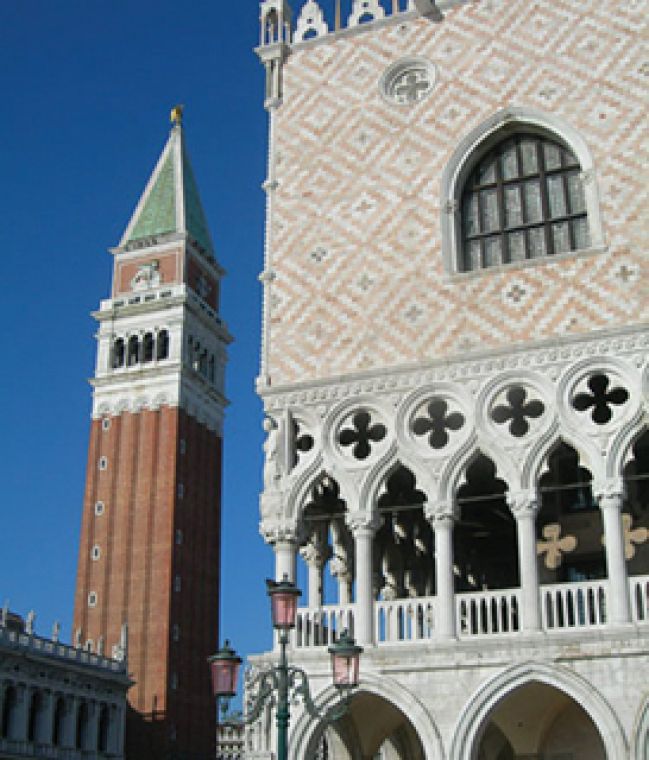
Assuming a previous acquaintance with
Venice, the next five days focus on bringing fresh insights
into this most famous of cities, transformed each day by tides
and wind as well as constantly changing light. On foot, we seek
out unusual churches in the quieter parishes and access some
exceptional private collections through special appointments.
We travel by boat to several less visited islands, attend a
chamber music concert in an historic venue and, as a particular
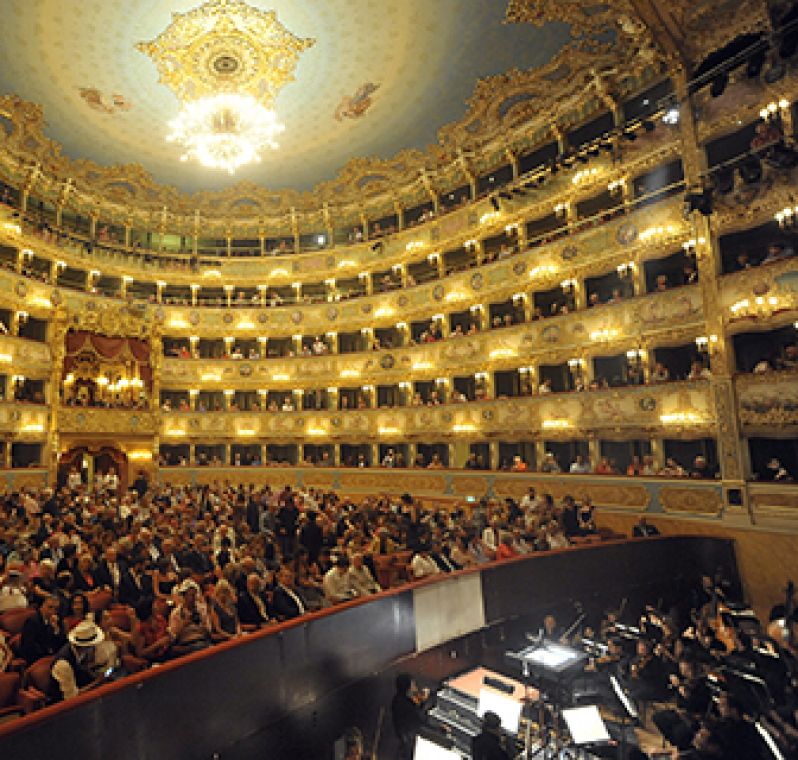
highlight, see a performance of Purcell’s
opera ‘Dido and Aeneas’ in La Fenice, Venice’s celebrated opera house, now
restored to its 18C splendour.
TRIP ITINERARY
DAY 1
D included
After meeting by midday at Marco Polo
airport, we have a short road transfer to Padua. An
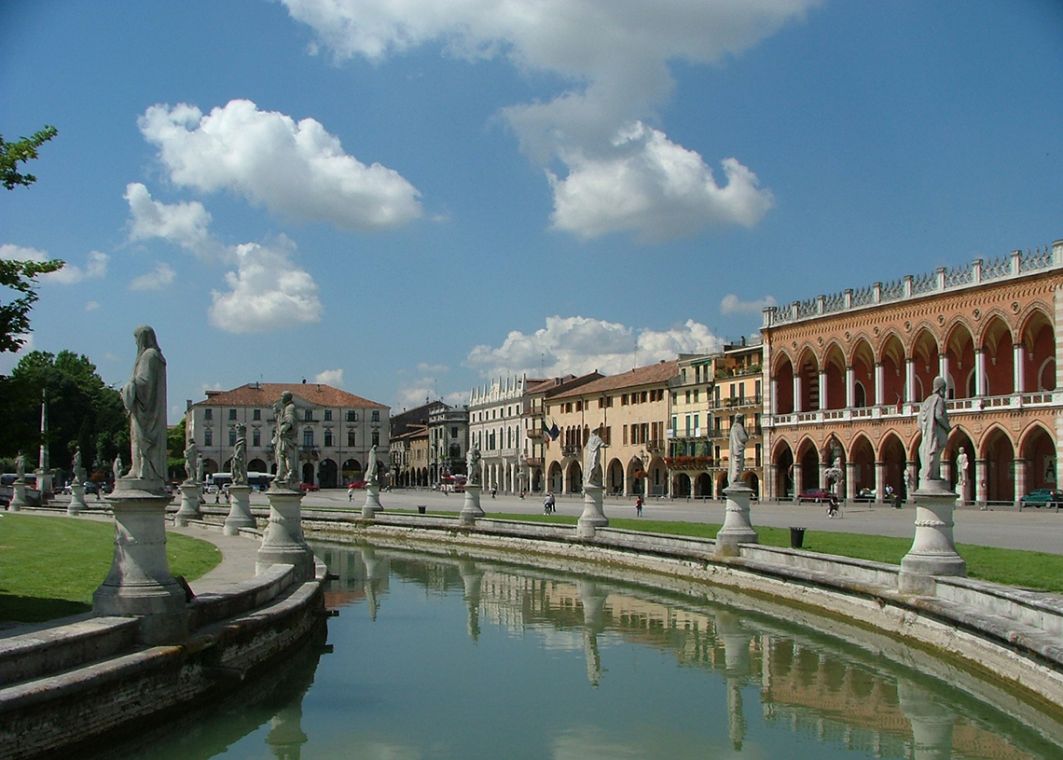
introductory walk takes us through the lovely oval piazza of
Prato della Valle, with its statues and pools, laid out in
1775, and into the Oratory of St. George to admire the
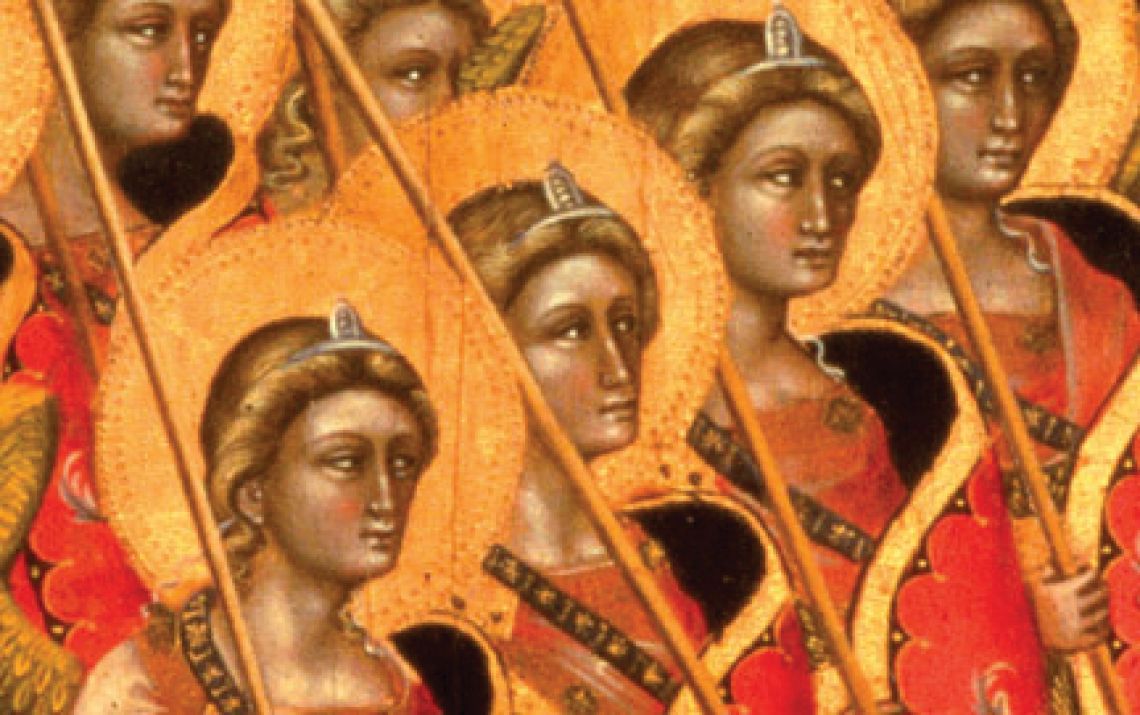
beautifully preserved 14C frescoes of the lives of St. George,
St. Catherine and St. Lucy. We visit the venerated pilgrimage
site of the Basilica of St Anthony, before settling into our
very comfortable and welcoming 4-star historic hotel in the
heart of mediaeval Padua. Before dinner, we enjoy an aperitivo in
the neo-classical Caffè Pedrocchi (1831), haunt of
intellectuals and politicians and a symbol of Padua, once
famous because its doors never closed.
DAY 2
B, L, D included
Today is devoted to exploring Padua,
beginning with an appointment to visit Giotto’s frescoes
in the Cappella degli Scrovegni - commissioned in 1303, they
represent a high point in the development of European art. We
next visit the great frescoed hall of Palazzo della Ragione,
built in 1218, and the fruit and vegetable markets on either
side of it which have been held daily for the last 8 centuries,
prior to a tour of Palazzo del Bò, the oldest part of
Padua university. We see the wooden cattedra where
Galileo Galilei once taught and the extraordinary anatomy
theatre (1594), the first of its kind, before lunch in a jolly
osteria serving authentic Padova cuisine. Following a visit to
the 12C Baptistery of the Duomo, the walls of which were
entirely frescoed by Giusto De Menabuoi in 1374-76, the
remainder of the afternoon is spent seeing the Musei Civici
degli Eremitani complex (including the magnificent Pinacoteca
and a fine archaeological collection) at an individual pace.
Dinner this evening is in an elegant enoteca in a cobbled lane
beside our hotel.
DAY 3
B, L, D included
We have an early start to board the
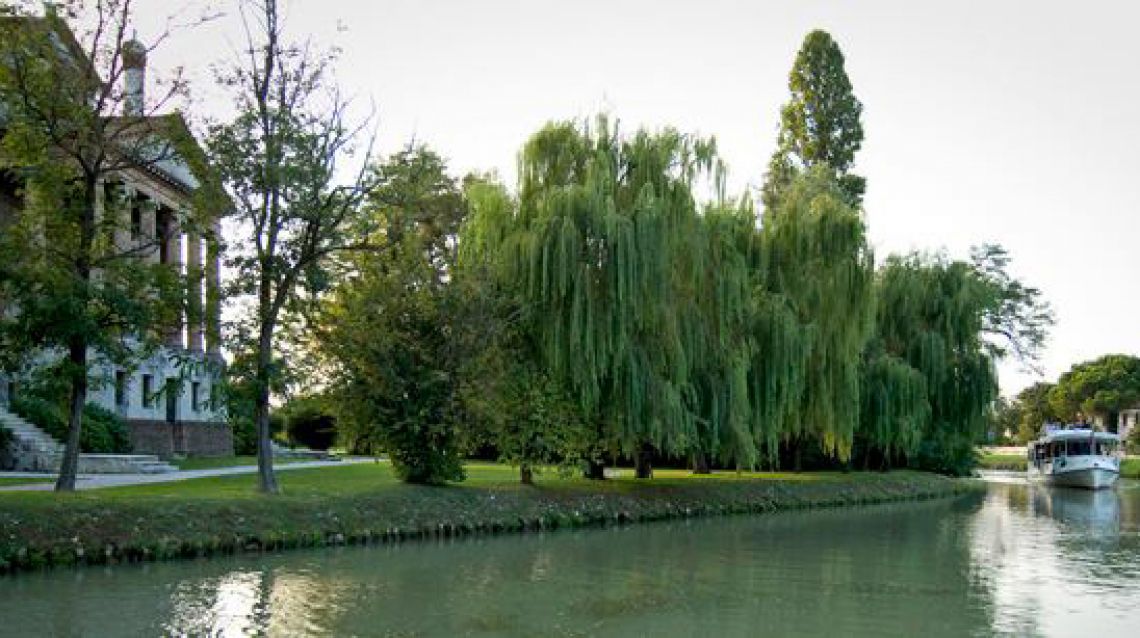
Burchiello, a comfortable modern boat with full facilities, and
spend most of the day on board, enjoying the peaceful country
scenery and views of the 70 or so Palladian-inspired villas on
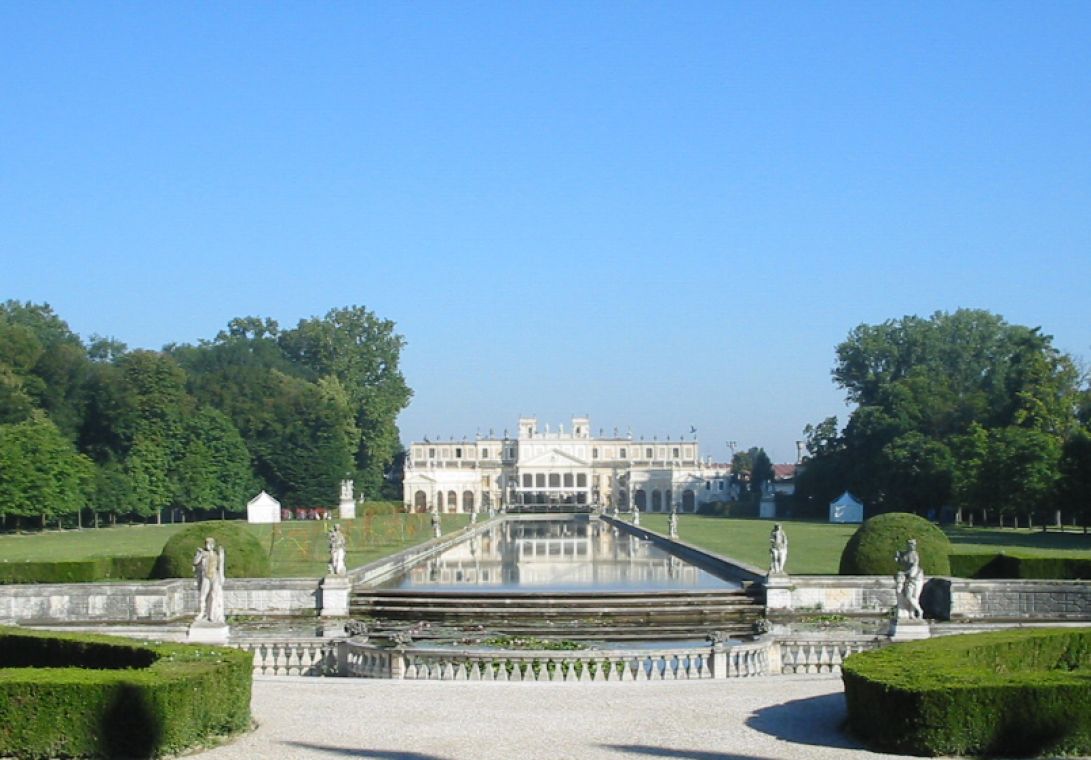
either side of the canal. Our first visit is to the magnificent
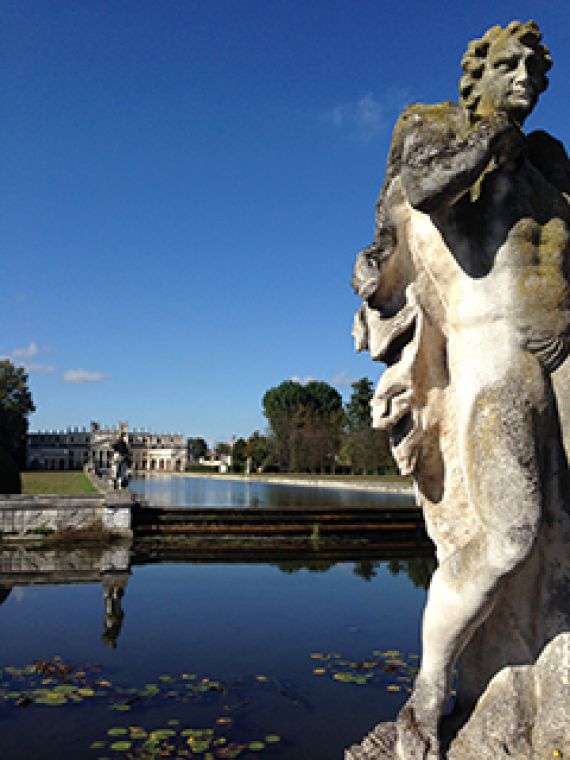
Villa Pisani, built for the family of Doge Alvise Pisani in
1720, once visited by Napoleon and the setting of the historic
meeting between Hitler and Mussolini in 1934, seeing its
frescoes (those in the ballroom are by G.B. Tiepolo), and the
park, with its pools, orangeries, stables and ice-house. After
passing through a series of locks and swing-bridges we visit
the delightfully decorated Villa Widmann, commissioned in the
early 18th century by the Serimann family, Venetian nobles of
Persian origin, then pause for a fish lunch in a restaurant
overlooking the water. We continue our cruise to the splendid
Villa Foscari, also known as La Malcontenta, designed by Andrea
Palladio and now restored and still partly occupied by members
of the Foscari family. Finally, we enter the lagoon and can
soon discern the spires and domes of Venice, where we disembark
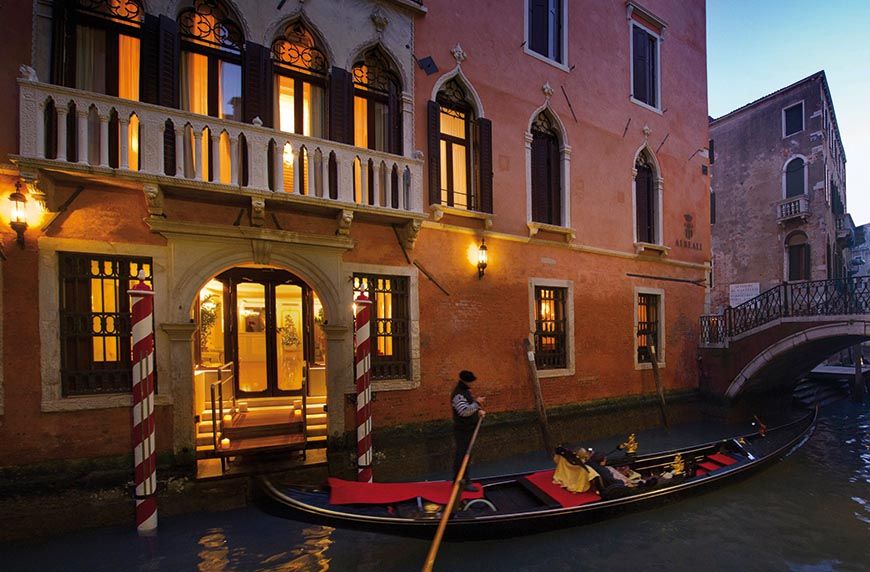
by Piazza San Marco and cross the Grand Canal to our very
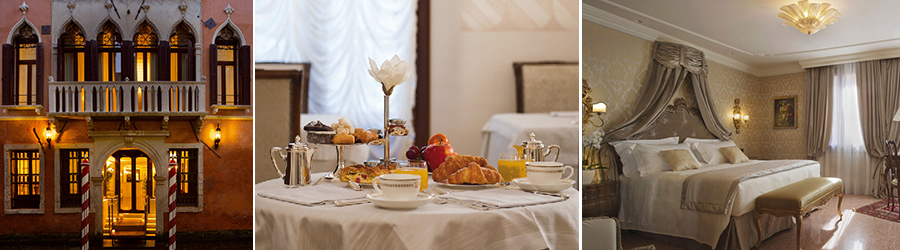
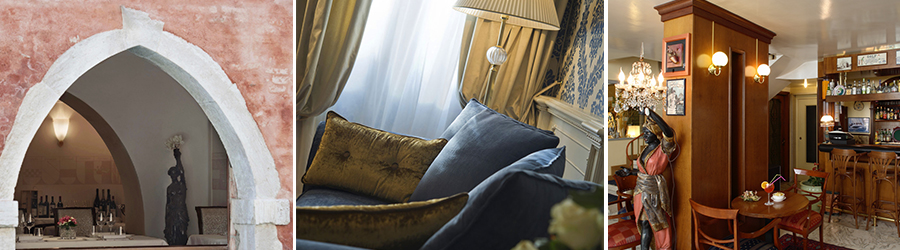
comfortable historic hotel (a converted palazzo furnished
with antiques). At dinner we sample such local winter dishes as
grilled radicchio di Treviso and pheasant with polenta.
DAY 4
B, L, D included
We explore the Dorsoduro area, beginning
with a private visit to the art collection of the
Patriarch’s Seminary, which contains artworks retrieved
from the churches and religious institutions suppressed - or
destroyed - by Napoleon. From here, we meander along the
Zattere making for the tiny, remote church of San Nicolò
dei Mendicoli, founded in the 7C and tucked away behind the
port of Venice. Backtracking, we visit Sant’Angelo
Raffaele, where the theme of Tobias and the Angel is depicted
above the main door and on the organ doors, and nearby San
Sebastiano, decorated by the Venetian master Paolo Veronese,
and where he is buried. After lunch in a bustling osteria, we stroll
back to San Pantalon to admire one of the world’s largest
paintings - on the ceiling - by Fumiani, past the university
and through Campo Santa Margherita, one of Venice’s
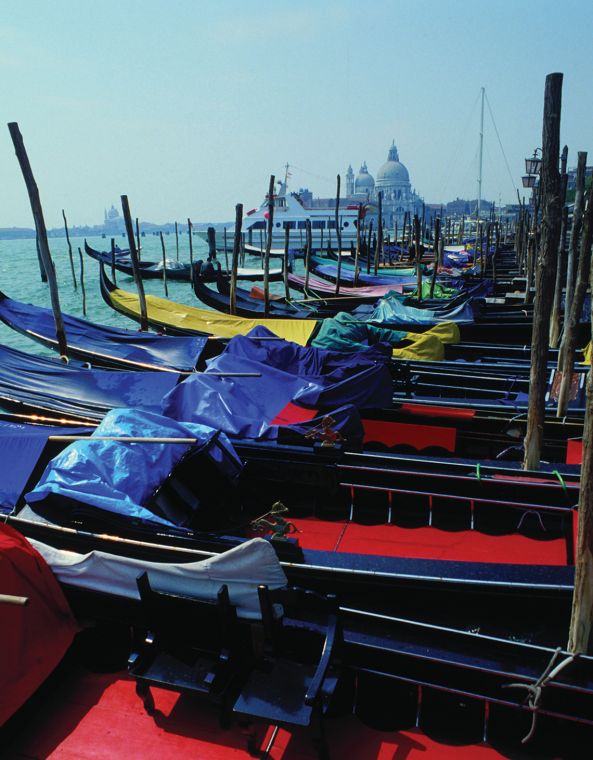
prettiest squares. A vaporetto delivers us to the seaward end of the Salute
where the New Contemporary Art Centre, housing Francois
Pinault’s collection, has recently opened in the
imaginatively restored Customs House. Tonight we attend a
performance of Purcell’s
opera ‘Dido and Aeneas’ in the jewel-box like Teatro
La Fenice, now completely restored
to its former splendour.
DAY 5
B, L, D included
A vaporetto takes us down the busy Grand Canal, past
palazzi once occupied by Venetian noblemen and writers,
composers and diplomats of many different nationalities, to the
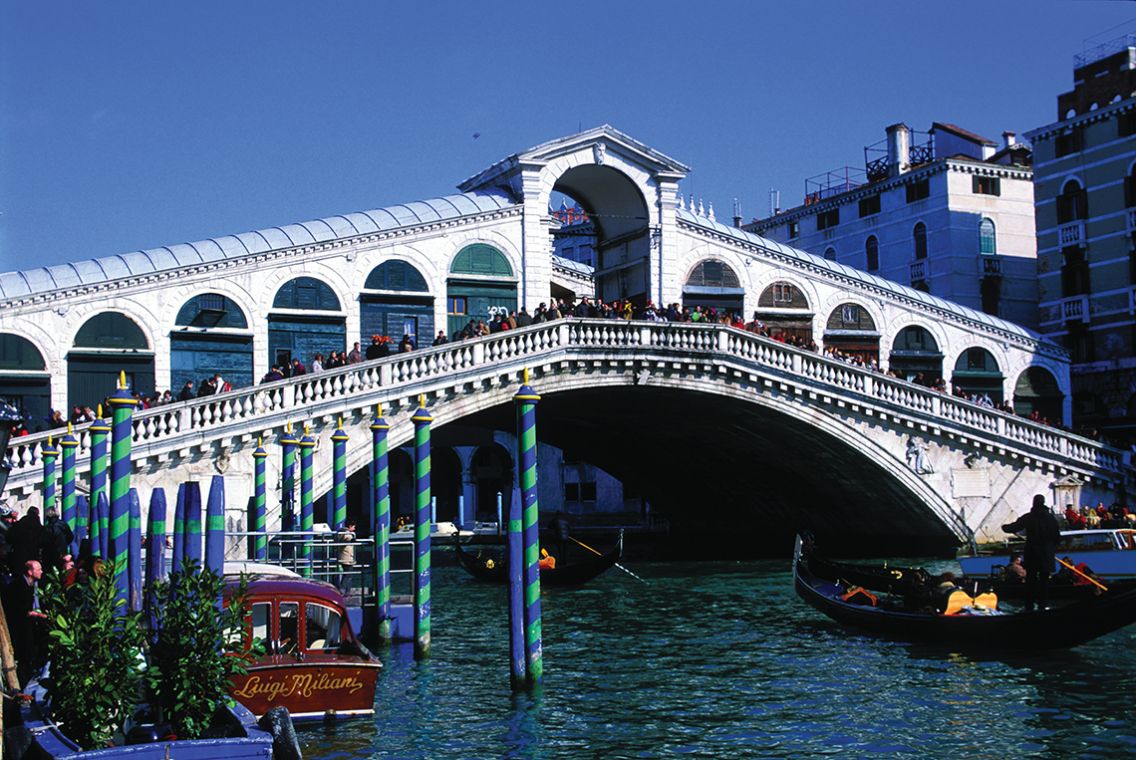
Rialto, Venice’s traditional centre of commerce. Our
first port of call is the animated and colourful fish, fruit
and vegetable markets, where the cries of traders and gulls
fill the air. We cross the canal by ferry gondola and head
towards the quiet calli and canals of Cannaregio, where we pause to
visit Tintoretto’s grave in the Gothic church of Madonna
dell’Orto. After lunch by the Canale di Cannaregio, we
visit the delightful Renaissance church of San Giobbe. An
exploration of the Ghetto follows (from the Venetian dialect geto, meaning a 16C
iron-foundry), including a tour of three of the historic
synagogues. At dinner we again have the opportunity to
appreciate the uncomplicated yet distinctive Venetian cuisine,
based largely on fish - a chance, perhaps, to sample local ways
of preparing baccalà, accompanied by fine D.O.C. wines of the
Veneto.
DAY 6
B, L, D included
We cross the Canale della Giudecca to
walk the entire length of the island of the Giudecca (just
under a mile), enjoying magnificent views across to Venice.
Tiny Sant’Eufemia is one of Venice’s oldest
churches, founded in 865, open by arrangement. We then visit
two of the most celebrated churches designed by Andrea Palladio:
the great domed Chiesa del Santissimo Redentore, commissioned
by the Senate of Venice in thanksgiving for deliverance from
the plague which devastated the city in 1575 and, on its own
island, San Giorgio Maggiore. Here, we have a special tour of
the adjoining Benedictine monastery, with its cloisters and
library by Longhena and a splendid 16C refectory designed by
Palladio, plus see the applied arts collections of the 16C
Palazzo Cini. After a light lunch in a small local trattoria we
catch a small boat to the Armenian monastery on the island of
San Lazzaro, a beautifully green and tranquil oasis in the
lagoon where Lord Byron studied the Armenian language.
DAY 7
B, L, D included
We devote a day to exploring some of the
most interesting islands of the lagoon, first taking a boat to
the island of Torcello, purported to be the original site of
the founding of the city of Venice in 452 AD, where the 7C
cathedral of Santa Maria Assunta contains an extraordinary
Veneto-Byzantine mosaic of the Last Judgement. After a lunch of
risotto di pesce on the nearby colourful island of Burano,
renowned for its lace-making and gaily painted houses, we
continue by boat to the atmospheric cemetery island of San
Michele. We see Codussi's San Michele in Isola, the first
Renaissance church in Venice, and walk among cypress trees to
find the gravestones of Igor Stravinsky, Serghej Dhiagilev and
Ezra Pound, then return by boat in time to take the opportunity
for some specialist shopping - Venetian handmade paper
products, glass, Carnival masks and boat pennants. After
dinner, we attend a concert in one of Venice’s delightful
historic venues.
DAY 8
B included
There is time to pursue individual
interests today - perhaps seeing the collections of the
Accademia or the Guggenheim just round the corner from our
hotel, or revisiting the Basilica of San Marco- before we
depart for a final boat ride across the lagoon to the airport.
Price includes:
All accommodation for Days 1 through 8 on
a double shared basis
All meals with wine at lunches and
dinners, other than those excepted in the daily notation
All land and water transportation as
described except during free periods
All entrance and sightseeing fees except
during free periods
One ticket for a performance in La Fenice
and one concert ticket as described in the itinerary
Gratuities for hotel and restaurant staff
Visa and Health Requirements
Visitors from the EU and the US currently
require a valid passport, but not a visa, for entry to Italy.
If you are a national of any other country, please check visa
regulations with your nearest Embassy of Italy.
At present there are no specific and
compulsory health requirements for entry to Italy. Residents of
countries in the EU can only claim free (emergency) medical
treatment in Italy by presenting their European Health
Insurance Card (EHIC), which is issued in the UK by the Department of Health. You may also wish to check the advice given to
travellers by the FCO.
Insurance
It is essential, and a condition of
booking, that you protect yourself with a suitable travel
insurance policy as soon as you book a trip. Follow this link
for information on a policy available to UK residents.
If you are already insured or a non-UK
resident, please inform us of your policy at the time of
booking.
|
|
||||||||||||||||||||
|
|
|||||||||||||||||||||
|
Kudu Travel Limited
Teffont Manor
Teffont Ewyas
Salisbury SP3 5RJ
Phone: 01722 716167
Registered in England
No. 03854049
|
|
||||||||||||||||||||
|
|
|||||||||||||||||||||
![]() |
|
||||||||||||||||||||
|
|
|||||||||||||||||||||
![]() |
|
||||||||||||||||||||
|
|
|||||||||||||||||||||
![]() |
|
||||||||||||||||||||
|
|
|||||||||||||||||||||
|
|
||||||||||||||||||||
|
|
|||||||||||||||||||||
|
|
|||||||||||||||||||||
|
|
|
|
|
|
|
|
|
|
|
|
|
|
|
|
|
|
|
|
|
|
|