Jun 15, 2026
Archaeology on Kudu Holidays: Ancient History at Walking Pace

Most archaeology tours deliver you to a site. Ours walk you to it, through the landscape that surrounds it, with a small group and a specialist guide, well away from the crowds.
Standing at the altar of Perperikon, high in Bulgaria's Rhodope Mountains, it takes a moment to absorb what you are looking at. This was once the second Oracle of the ancient world, as celebrated as Delphi, then lost for millennia before being rediscovered relatively recently. According to legend, it was here that Alexander the Great received the prophecy that he would conquer the world. On a Kudu tour, you reach it on foot — climbing a wide paved path, then up steep uneven stone steps, emerging to stand at the altar with no audio guide, no crowds, and a guide who knows exactly where to look.
What makes Kudu’s archaeology tours different
Most archaeology tours mean large coaches, timed entry slots, and a commentary delivered to thirty people at once. Our groups run to a maximum of 14 guests — often fewer — which means a conversation, not a lecture. Our guides are history enthusiasts, linguists, and specialists who have spent years guiding in these regions. At sites where the crowds haven't yet arrived, that depth of knowledge makes all the difference.
We don't set out to create archaeology holidays in the traditional sense. What we do is build itineraries around the places most people haven't thought to visit yet, and it turns out that some of the world's most extraordinary archaeological sites are precisely there.
Bulgaria: Thracians, Romans, and an Oracle in the Mountains
Bulgaria's relationship with the ancient world runs deep and, for most visitors, largely undiscovered. Our Black Sea Coast and Rhodope Mountains tour covers ground that very few western travellers reach.
In Kazanlak, we visit the remarkable Thracian tomb, a replica of the original, which dates to the early 3rd century BC and is thought to mark the grave of a tribal chieftain. The Hellenistic wall paintings inside are of exceptional quality, depicting the deceased with horses and servants in vivid detail.

At Cape Kaliakra, a dramatic headland on the Black Sea, the remains of an ancient Greek fort occupy one of the most commanding coastal positions you are likely to encounter. Further along the coast, Varna's Archaeological Museum holds one of the most significant collections of Thracian gold objects in existence, dating to the 6th century BC.

Then there is Perperikon itself — the recently rediscovered Oracle — reached on foot through the Rhodope landscape, with a specialist guide who can place it properly in the ancient world.
Plovdiv's Roman theatre, built during the reign of Trajan in the 2nd century AD, is a different proposition: a major site, yes, but approached from a small boutique hotel in the old town, on foot through cobbled lanes, rather than from a tour bus car park.

Northern Cyprus: Bronze Age to Byzantine, without the crowds
Northern Cyprus is, by any measure, one of the most archaeologically layered places in the Mediterranean, and one of the least visited.
The ruins of Salamis, founded according to legend by Teucer on his return from the Trojan War, became the most important cultural and trade centre on Cyprus over some 1,700 years, until Arab raids brought it to an end in the 7th century AD. On our 6-kilometre walk through the site, we discover the remains of a gymnasium with baths, an amphitheatre, a fish market, a cistern, an olive oil mill, and two early basilicas. We do so, almost always, without another tour group in sight.

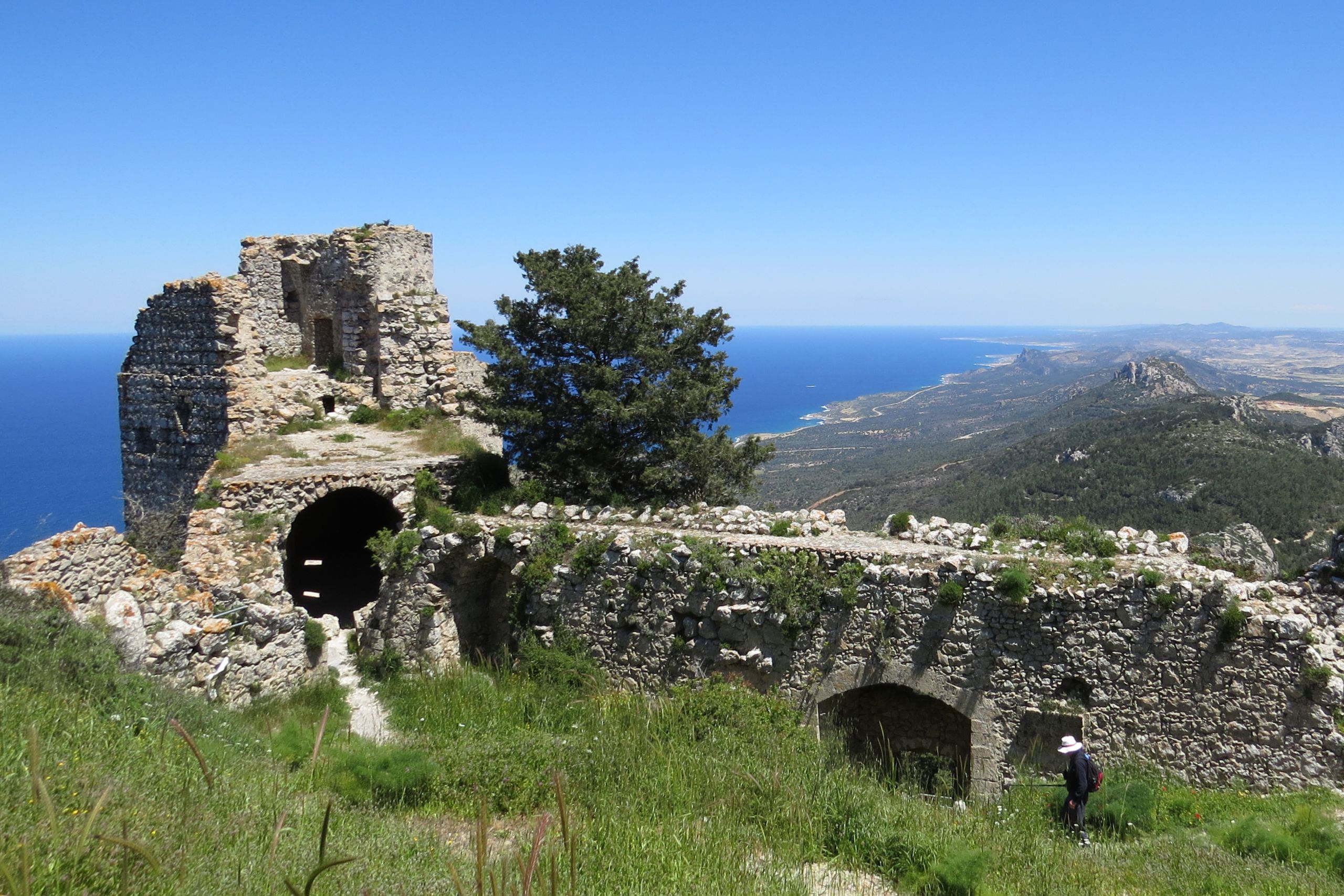
Later in the tour, we visit Vouni and Soli. The hilltop Vouni palace of a Persian king dates to the 5th century BC — built and then destroyed within a single lifetime, which gives it an eerie completeness. The more extensive Roman site of Soli includes floor mosaics and a theatre. Both sit in quiet agricultural countryside, with no signage designed for mass tourism, which is rather the point.

Elsewhere on the island, our walking route crosses an ancient necropolis with rock-cut tombs and passes a Bronze Age hilltop fortress. The Shipwreck Museum in Kyrenia displays a cargo ship wrecked in the 4th century BC, still carrying its cargo of almonds and wine amphorae.
Explore our Northern Cyprus tour →
Istria ancient history tour: Romans, Early Christians, and a Tribe Called the Histri
Croatia's Istrian peninsula has been settled, fought over, and rebuilt for so long that the archaeology here arrives in overlapping layers — Roman, Byzantine, Venetian, medieval — often within a few kilometres of each other.
We begin at Nesactium, the final stronghold of the Histri tribe, from whom the peninsula takes its name. The Romans conquered it in 177 BC. Today it is deserted and, as our itinerary puts it plainly, tourist-free. A specialist guide leads a small group through what remains, and what remains is evocative.
The same afternoon takes us to Pula, where the 1st-century BC Pula Arena is one of the best-preserved Roman amphitheatres anywhere in the world. We explore it with a private guide, which means questions are answered properly and the afternoon moves at the group's pace rather than a schedule's.

Poreč was originally built as a Roman fortified settlement in the 2nd century BC. The Euphrasian Basilica there, dating to the 6th century, is celebrated for its Byzantine mosaics and is a UNESCO World Heritage Site — though on a Kudu visit, the setting feels more like a discovery than a tick on a list.

Uzbekistan Silk Road tour: Bukhara, Samarkand, and 2,500 years of history
For those prepared to travel further, Uzbekistan offers something that is genuinely difficult to find elsewhere: Silk Road cities of extraordinary historical weight, experienced in small groups, with specialist guides who have knowledge of and affinity for this part of the world.
Bukhara was well established by the 6th century BC. The waves of history that have passed through it — Achaemenid, Alexandrian, Samanid, Mongol, Timurid, Soviet — are legible in its buildings if you have the guide to read them. The Ark Fortress, the Ismail Samani Mausoleum, the 9th and 10th-century Golden Age of arts and science: our specialist local guide brings this into focus in a way that no audio commentary could.

Samarkand is similarly ancient, equally layered. The ruins of the Afrosiab fort and the museum containing 7th-century murals are a morning's work. The observatory of Ulugh Beg, Tamerlane's grandson, who mapped the stars with extraordinary precision in the 15th century, is a short drive away.

The highlight for many guests is different: the UNESCO-listed desert fort of Ayaz-Kala, reached by crossing what was once the Oxus river into the Kyzylkum desert. Its origins go back to the 4th century BC. The landscape around it has barely changed.
Why small group archaeology tours go deeper
The sites above are not secrets, several are UNESCO listed, and all are historically significant. What Kudu offers is not access to places others can't find. It is the combination of small groups, specialist guides, carefully chosen timings, and an instinct for going where the coaches haven't arrived yet.
Walking to a site matters. It changes the encounter. Arriving at Perperikon on foot, having climbed through the Rhodopes, is not the same as arriving by minibus. Standing at Salamis having walked 6 kilometres through the site, with a guide who has been bringing guests here for years, is not the same as following a map with a leaflet.
Our guests tend to be people who have already seen the obvious places and are ready for something more considered. If that sounds like you, do join us!